Dyeing and Colour Fastness of Jewellery Pouches: From Colour Deviation to Fading
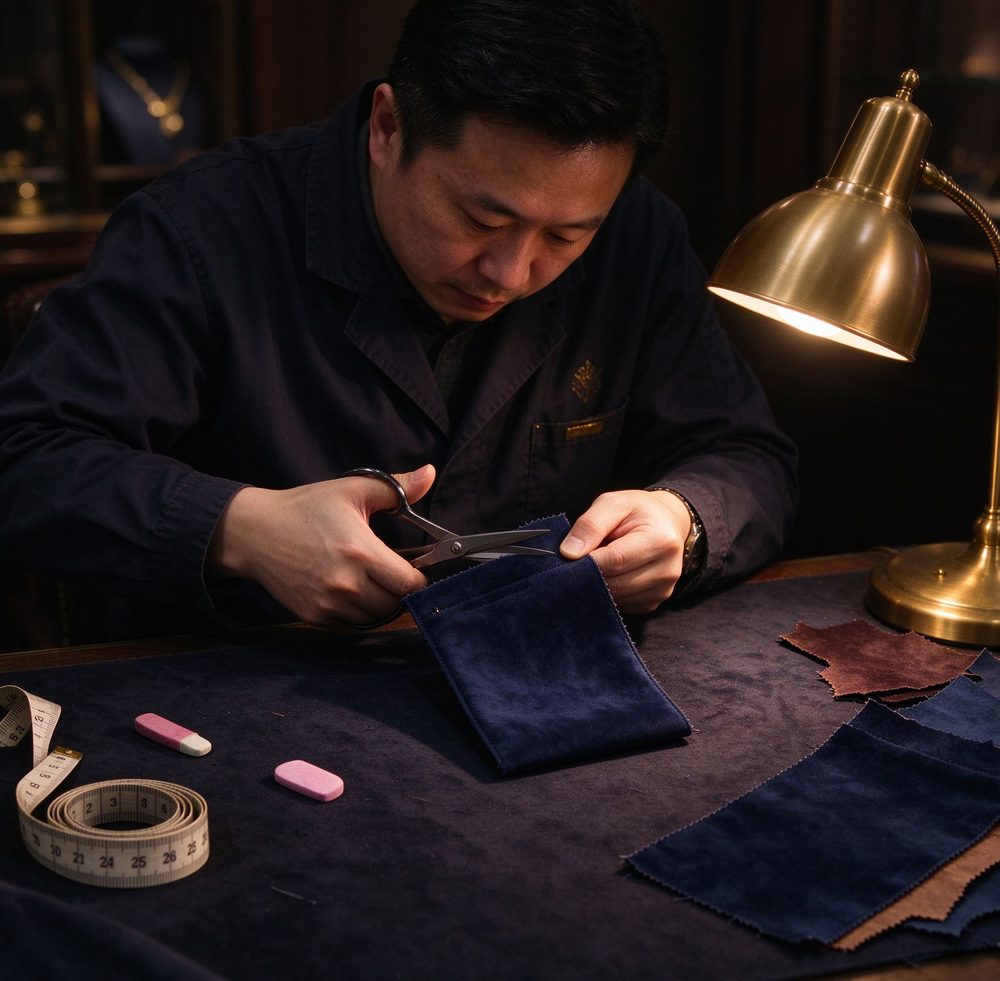
Colour is the first thing a customer notices about a jewellery pouch, and how the colour behaves afterwards decides whether that first impression lasts. Fading, colour deviation and uneven batches are among the most complained-about hidden quality issues in jewellery packaging, and nearly all of them can be controlled at the dyeing stage.
The first step is matching the dye to the fabric. Reactive dyes bond strongly with cotton and linen, giving bright, stable colours; acid dyes suit silk and nylon but need precise process control; disperse dyes are used for polyester and similar synthetics. Velour and velvet pouches are harder to dye than plain-weave fabrics because the longer fibres hold more unfixed dye, so they deserve extra attention at sampling.
Colour fastness is not one indicator but four: washing, rubbing, light and perspiration. Wet rubbing matters most in summer; light fastness shows up under shop display lights; perspiration fastness matters because pouches sit against skin and metal jewellery for long periods. A practical acceptance rule is to specify a rubbing fastness of no less than grade four in the purchase agreement.
Batch-to-batch deviation has clear causes: dye lots, fabric lots, water temperature and process time. Practical controls include keeping a master colour card checked under agreed lighting, comparing each production lot against the first one, and completing large orders in a single dye lot where possible. Dark velour pouches and printed pouches are the riskiest areas; a simple white-cloth rub test and a simulated week of jewellery contact at the sampling stage reveal most problems before mass production.
The reliable way to manage colour quality is to write it into the acceptance standard: dye safety and test reports, dry and wet rubbing grades, light fastness, allowed batch deviation, and sample retention. Clear measurable terms turn vague disappointment into checkable scales.
Colour is not a mystery and fastness is not luck. Ba Ge Tu (Bagetu) focuses on custom jewellery packaging and provides one-stop control from dyeing process to final acceptance. Contact us to discuss your colour requirements.